
Archives
Propaganda: The Influence on Public Opinion and Policy Making

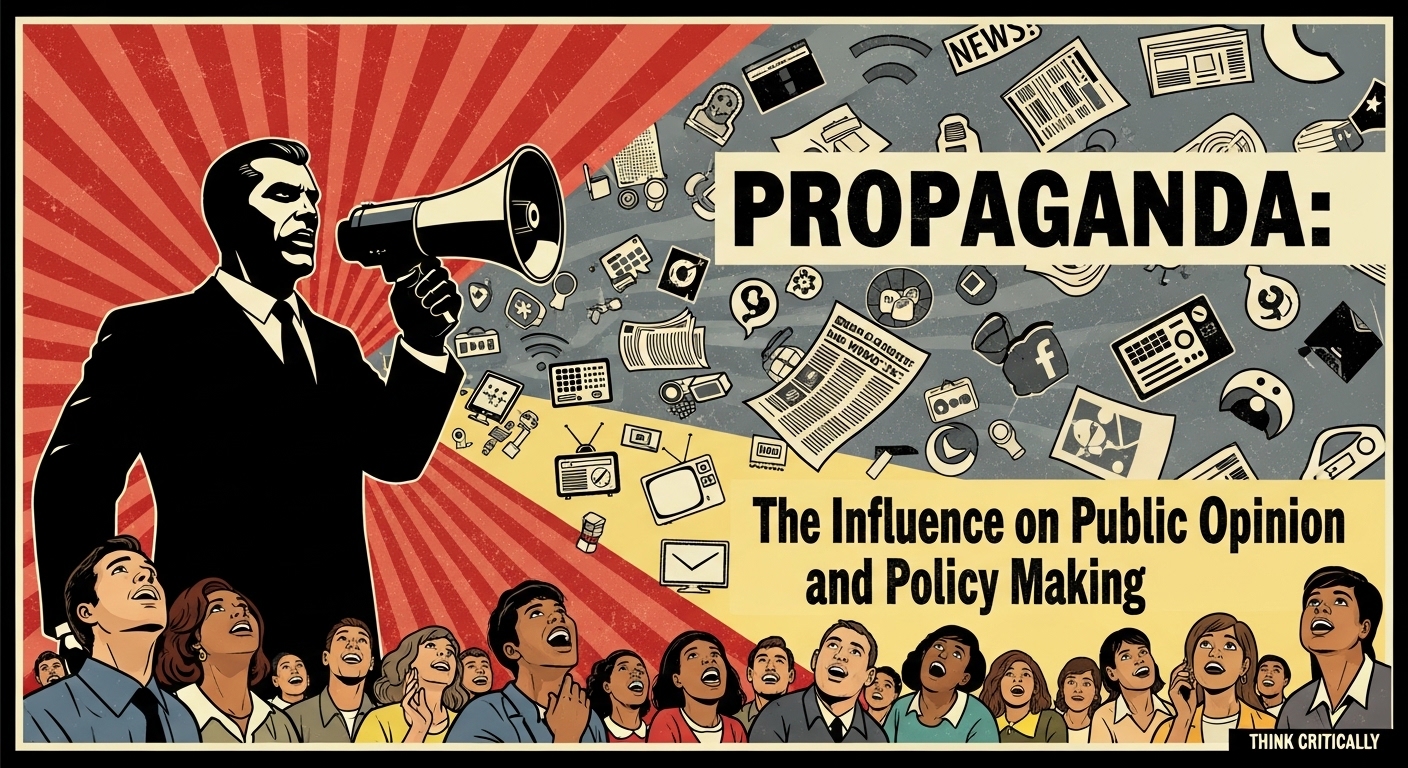
Propaganda is a powerful tool that shapes our perceptions, influences decisions, and molds societal beliefs. Often cloaked in persuasive language and captivating imagery, it seeps into the very fabric of public discourse. From political campaigns to advertising strategies, propaganda has been a constant presence throughout history. But what exactly does it entail? How has it evolved over time? And more importantly, how does it impact our opinions and the policies that govern us?
As we delve into this fascinating topic, we’ll explore historical examples that illustrate its potency. We’ll dissect the techniques employed by propagandists to sway public sentiment and examine their profound effects on policymaking processes. Amidst rising concerns about misinformation and manipulation, understanding propaganda becomes essential for navigating today’s complex information landscape.
Join us as we uncover the layers of influence behind propaganda and arm ourselves with critical thinking skills to combat its reach. Whether you’re a curious learner or simply wish to be more discerning in your media consumption, this exploration promises insights that resonate deeply across various facets of life.
Definition of Propaganda
Propaganda refers to the strategic dissemination of information aimed at influencing public opinion. It’s not just about sharing facts; it’s about presenting them in a way that stirs emotions and shapes beliefs.
At its core, propaganda often involves selective storytelling. This means highlighting certain aspects while downplaying others to create a desired narrative. It can be found in various forms—posters, speeches, media coverage, or social media campaigns.
The intent behind propaganda is crucial. Whether for political gain, commercial interests, or social movements, it seeks to persuade rather than inform objectively.
It’s important to recognize the blurred lines between genuine communication and manipulative messaging. Understanding this distinction helps us navigate the complex landscape of information we encounter daily.
Historical Examples of Propaganda
Throughout history, propaganda has played a pivotal role in shaping societies. During World War I, the British government launched an extensive campaign to rally public support through posters and pamphlets. These materials depicted enemy forces as barbaric threats to civilization.
In Nazi Germany, the regime exploited propaganda masterfully. Joseph Goebbels led efforts that used film, radio, and art to promote anti-Semitism and glorify Aryan ideals. The infamous “The Eternal Jew” showcased Jews as subhuman monsters.
The Cold War era saw both the U.
S. and Soviet Union utilizing media for ideological warfare. The U.
S.’s “Voice of America” aimed to counter communist narratives while promoting democracy overseas.
More recently, political campaigns have harnessed social media algorithms to influence voter sentiment dramatically. These modern examples underscore how deeply entrenched propaganda remains across varying contexts and technologies throughout time.
Techniques Used in Propaganda
Propaganda employs various techniques to sway public perception and behavior. One common method is emotional appeal. By tapping into feelings like fear, joy, or anger, propagandists can create a strong connection with their audience.
Another technique is the use of loaded language. Words carry power; choosing terms that evoke specific reactions can shape opinions significantly. For instance, labeling someone as a “hero” versus an “activist” can skew perceptions entirely.
Repetition also plays a crucial role in propaganda. By continuously exposing audiences to the same message, it becomes ingrained in their minds over time. This familiarity often leads to acceptance without critical examination.
Visual imagery further enhances these messages. Striking images or symbols resonate deeply and can convey complex ideas quickly, making them memorable and impactful.
Cherry-picking facts—highlighting only favorable data while ignoring contradictory evidence—creates a distorted narrative that supports the intended agenda.
Impact on Public Opinion
Propaganda plays a critical role in shaping public opinion. Through strategic messaging, it can influence how people perceive issues, events, and even entire populations.
Consider political campaigns that utilize propaganda to build support or instill fear. By framing information selectively, they guide voters towards specific beliefs and attitudes.
Media outlets often amplify these messages. Repeated exposure can normalize ideas that might initially seem extreme. This gradual acceptance alters the landscape of public discourse.
Social media has added another layer to this dynamic. Viral content quickly spreads misleading narratives, swaying opinions at an unprecedented pace.
The emotional appeal used in propaganda further solidifies its impact on individuals’ beliefs and decisions. When people connect emotionally with a message, they’re less likely to question its validity.
Understanding this influence is vital for navigating today’s complex information environment.
Influence on Policy Making
Propaganda plays a crucial role in shaping policy decisions. Governments and organizations harness its power to sway public opinion, which can create pressure on policymakers.
When citizens adopt particular viewpoints influenced by propaganda, lawmakers often feel compelled to respond. This dynamic can lead to changes in legislation or shifts in government priorities.
Consider how social movements use powerful messaging to rally support for causes like climate change or healthcare reform. The narratives crafted through propaganda resonate with the public, pushing these issues into the legislative spotlight.
Moreover, lobbying groups frequently employ strategic propaganda techniques to promote specific agendas. Their influence can lead to significant policy shifts that align with their interests rather than the broader needs of society.
The resulting policies may reflect popular sentiment but could also prioritize partisan goals over comprehensive solutions. Thus, understanding this influence is essential for informed civic engagement and responsible decision-making.
Ethical Considerations
Ethical considerations surrounding propaganda are complex and often contentious. At its core, the intent behind propaganda can vastly influence whether it is perceived as acceptable or manipulative.
Using emotional appeals to sway public opinion raises questions about consent. Are individuals truly making informed decisions when emotions overshadow facts? This manipulation can lead to societal division rather than understanding.
Moreover, the responsibility of creators looms large. Should they prioritize persuasive impact over honesty? When misinformation spreads under the guise of propaganda, trust in institutions erodes significantly.
The line between advocacy and deception is thin. Ethical communicators must navigate this landscape carefully, ensuring their methods align with truthfulness while still being compelling. It challenges us all to reflect on our values regarding free speech versus potential harm caused by misleading narratives.
Combating Propaganda with Critical Thinking
Critical thinking is our best defense against propaganda. It equips us with the tools to question information rather than accept it at face value.
When faced with a claim, ask yourself who benefits from this message. Understanding the source can reveal underlying motives. Investigate further by checking facts across multiple reliable sources.
Challenge assumptions within the narrative. Is there evidence supporting these claims? Scrutinizing data and context allows for a clearer understanding of the situation.
Engage in discussions that encourage diverse viewpoints. Listening to others fosters dialogue and broadens perspective, making it harder for any single piece of propaganda to dominate your thoughts.
Practice self-reflection on your biases. Recognizing personal inclinations helps filter out manipulated content effectively. Critical thinking isn’t just a skill; it’s an ongoing commitment to seek truth amidst noise.
Conclusion
Propaganda has played a significant role throughout history, shaping public opinion and influencing policy decisions. Its power lies in its ability to simplify complex ideas into digestible messages that resonate with people’s emotions. From World War-era posters to modern social media campaigns, the techniques used in propaganda have evolved but remain effective.
The impact on public opinion cannot be understated. Propaganda can create fear or inspire hope, often steering societal norms and attitudes in specific directions. This shift can lead directly to policy changes as leaders respond to the sentiments expressed by their constituents.
However, the ethical implications are profound. Misleading information can undermine trust in institutions and erode democratic processes. As citizens navigate an increasingly complex media landscape filled with competing narratives, critical thinking becomes essential.
By fostering skepticism and encouraging thoughtful analysis of information sources, we can combat the insidious effects of propaganda. Engaging with diverse perspectives allows individuals to see beyond surface-level claims and develop a more nuanced understanding of issues at hand.
As society progresses further into this digital age marked by rapid communication advancements, the need for awareness regarding propaganda remains ever-present. Understanding its mechanisms empowers us all—enabling informed decision-making while safeguarding our collective future against manipulation.
There is a particular kind of player who never settles in for a long night. They open the site, scan the lobby, pick something loud and fast, and they are gone again before the kettle boils. If that sounds familiar, you are part of a growing crowd, and the Betmen platform is built in a way that suits this rhythm surprisingly well.
Short, high-intensity sessions are not a compromise. They are a deliberate style. The appeal is not in grinding through a hundred spins but in the sharp, compressed thrill of a handful of decisions made quickly. Players who play this way tend to know exactly what they want: a fast result, a clear outcome, and no lingering.
The Anatomy of a Five-Minute Session
Picture the typical pattern. Someone opens the mobile site during a commute, a lunch break, or the quiet stretch before dinner. They have a rough number in mind — maybe twenty or thirty dollars — and they intend to spend it in one focused burst rather than nurse it across an hour.
What follows is rarely random. Experienced short-session players tend to follow a loose internal script:
- Pick one or two games, not five. Splitting attention kills the intensity.
- Set the stake high enough that each spin or round actually matters.
- Decide on a stop point before the first bet, not after a loss.
- Leave when the burst is done, win or lose, rather than chasing a better ending.
That last point is the one most people struggle with. The compressed format only works if the player respects the boundary they set. When it works, the whole thing feels clean — a self-contained episode with a beginning and an end, rather than a slow drift into fatigue.
Why the Format Rewards Focus
A tight session forces clarity. With only a few minutes and a handful of rounds, there is no room for the vague, drifting bets that fill longer play. Every decision carries weight because it is one of only a few. Players often describe this as feeling more present — more aware of each spin, each card, each round of the wheel.
Games That Fit the Quick-Burst Mindset
Not every title suits a five-minute visit. Slow-burn slots with long bonus cycles can feel frustrating when you know you are leaving soon. The games that dominate short sessions tend to resolve fast and carry visible drama.
Crash-style games are a natural fit. The round lasts seconds, the decision point is razor-thin, and the outcome is immediate. There is no waiting for a bonus to trigger. You set a cash-out, watch the multiplier climb, and either take it or lose it. That single moment of timing is the entire experience, compressed into a few heartbeats.
Live roulette and Lightning Roulette draw a similar crowd. The spin is quick, the result is unambiguous, and the live format adds a sense of occasion without demanding a long commitment. Players who like a bit of theatre with their speed often gravitate here. Crazy Time and Monopoly Live sit in the same territory — big, loud, and resolved in a single round, even if the bonus rounds occasionally stretch the clock.
On the slot side, high-volatility titles with fast spin cycles suit the pattern. Sweet Bonanza and Book of Dead both resolve quickly and offer the possibility of a sudden, dramatic swing. That is exactly what a short-session player is buying into: the chance of a sharp outcome rather than a steady grind.
Stake Discipline in a Compressed Format
Here is where short-session play gets interesting. Because the whole session is small, the temptation is to bet bigger to make it feel worthwhile. That can work — but only with a clear ceiling.
A realistic example: a player deposits thirty dollars, decides each spin will be one dollar, and gives themselves a hard stop at a hundred spins or a balance of sixty, whichever comes first. That is thirty decisions, each with a defined cost. The session has structure. It has a natural end.
Contrast that with the same player betting five dollars a spin with no cap. Six losses and the session is over before it began, and the frustration of a truncated burst often leads to a top-up deposit — which breaks the entire logic of the format.
The players who enjoy this style most are the ones who treat the stake as the price of admission. They are not trying to build a bankroll across weeks. They are paying for a short, sharp experience, and they want it to last exactly as long as they planned.
Mobile Visits and the Repeat-Visit Habit
Short sessions and mobile play are natural companions. The Betmen mobile site loads cleanly on both iOS and Android, and the lobby is easy to navigate with a thumb. That matters more than it sounds. A clunky interface eats into a five-minute window. A smooth one lets the player get straight to the action.
What emerges is a pattern of repeated brief visits rather than one long sitting. A player might check in three or four times across a day, each time for a handful of rounds. The individual sessions are small, but the habit is consistent. Some keep a running note of their results; most do not bother.
The risk here is obvious. Repeated short visits can quietly add up to more than a single long session would have. The players who manage it well tend to set a daily ceiling rather than a per-session one, treating the whole day as the real unit of measurement.
Reading the Lobby Fast
Quick-visit players develop a kind of shorthand. They know which games resolve fast, which ones have long intro sequences, and which ones they can jump into without a tutorial. That familiarity is part of the appeal — the sense of dropping into a known rhythm rather than exploring.
Where the Format Breaks Down
Short, high-intensity play is not for everyone, and it is worth being honest about where it goes wrong. The main failure mode is the chase. A player loses their burst stake in three minutes, feels cheated by the brevity, and immediately reloads. That is no longer a short session — it is an escalating one dressed up as a quick visit.
The second failure is bonus-hunting in a format that cannot support it. Signing up for a welcome offer and then trying to clear wagering in five-minute bursts is a recipe for frustration. The math simply does not fit the rhythm. Players who enjoy quick bursts are usually better off ignoring bonus mechanics entirely and playing with their own funds on their own schedule.
There is also the matter of game choice. A player who loves a slow-building slot with a rare bonus will feel short-changed by a five-minute window. Matching the game to the format matters as much as matching the stake to the budget.
Get Your Bonus Now and Play Your Way
The short-session style is not about playing less — it is about playing with intent. A handful of focused rounds, a stake you have already decided on, and a clean exit. That is the whole philosophy, and it is one the Betmen lobby supports without much friction.
If you recognise yourself in any of this, the practical next step is simple. Pick one game, set your number, and give yourself a real stop point before you start. Then see how a five-minute burst actually feels when it has edges. Get Your Bonus Now!
Most people don’t sit down at an online casino for hours anymore. They open a tab on the train, spin for ten minutes during a lunch break, or tap through a few rounds while waiting for a kettle to boil. That behaviour shapes everything about how a platform feels, and it’s the lens I want to use here. This piece looks specifically at short, high-intensity mobile sessions, the kind where you make a handful of quick calls and move on. If you’re the type who plays in bursts, a MoonWin Casino review review written around that habit makes more sense than a generic feature list.
The pattern is simple. You land on the site, you already know roughly what you want, and you want the outcome fast. No browsing for twenty minutes, no reading every paytable. MoonWin’s mobile-first setup suits this reasonably well, and the rest of this article is about how that plays out in practice, what it feels like, and where the friction shows up.
Why the Burst-Play Mindset Changes Everything
There’s a real difference between a player who settles in for an evening and one who plays in five-minute windows. The second type makes fewer but sharper decisions. They don’t chase a session narrative. They pick a game, set a number in their head, and either hit it or stop.
In this style of play, the platform’s job is to get out of the way. Loading speed matters more than a sprawling lobby. A clean balance display matters more than a dozen promotional banners. Players in this mode tend to:
- Open the site with a specific game already in mind
- Deposit small amounts, often repeatedly rather than in one go
- Set a rough loss ceiling before the first spin
- Leave the moment the goal is hit or the ceiling is reached
That last point is the hard one. Quick sessions reward discipline, and the games are built to keep you a little longer than planned. Recognising that pull is half the battle.
Getting In Fast: Login and the First Minute
The first minute decides whether a burst session happens at all. If login drags or the page stutters on a phone, most players just close the tab. MoonWin runs in the browser on iOS and Android without an app download, which removes one barrier. Touch navigation is responsive, and the games load quickly enough that you’re not staring at a spinner.
A typical short session looks like this. You log in, check your balance, and jump straight to a slot you’ve played before. Maybe you top up twenty euros. Then it’s straight into the action, because the whole point of this play style is that the action starts almost immediately.
What players actually do in the first two minutes
They don’t explore. They repeat. The library holds thousands of titles from studios like NetEnt, Hacksaw Gaming and Play’n GO, but a burst player might touch two of them in a week. Familiarity beats novelty when your window is short. You know the volatility, you know roughly how the bonus triggers, and you don’t want to learn a new mechanic with four minutes on the clock.
This is also where the welcome offer can matter, though not in the way marketing usually frames it. A 100% match up to $250 plus 100 free spins on Wild Cash gives a first-timer something to work with across several short visits rather than one long grind. The 40x wagering on the bonus and the same on free-spin winnings is steep for anyone trying to clear it in one sitting. Spread across quick sessions, it’s more manageable, and that fits the behaviour we’re talking about.
Decision Timing When Every Spin Is a Quick Call
Here’s where short sessions get interesting. With limited time, bet sizing becomes the central decision. A player who plans to be on for ten minutes can’t afford to feel their way in slowly. They pick a stake that gives them enough spins to actually reach a bonus round, then hold it steady.
Compare two approaches within the same five-minute window:
- Minimum stakes throughout, maximising spin count but rarely triggering features
- A moderate stake that trades some spins for a realistic shot at a bonus
Neither is wrong. The point is that burst players tend to commit to one and stick with it, because switching mid-session eats the clock. Bonus buy slots complicate this further. Dropping straight into a feature skips the waiting, which is exactly what a time-poor player wants, but it also concentrates the risk into a single click. That’s a genuine trade-off, not a shortcut.
Progressive jackpots pull in the opposite direction. They tempt the burst player to stay longer than planned, chasing a number that almost certainly won’t land in a five-minute window. Sensible quick-session play treats them as a lottery ticket, not a strategy.
Keeping Risk Small When Time Is Short
Short sessions are naturally lower-risk if you let them be. The maths is straightforward: less time means fewer spins, and fewer spins means a smaller total exposure. The danger is the session that starts short and quietly becomes long.
A few habits keep burst play under control:
- Decide the session budget before logging in, not after the first loss
- Use the site’s deposit and loss limits so the ceiling is enforced, not remembered
- Treat any win as a natural stopping point rather than a reason to push on
- Keep withdrawals simple by using crypto or e-wallets, where processing is often same-day
That last one deserves a mention. Nothing kills the satisfaction of a quick win like waiting days for a card withdrawal. Crypto and e-wallet cashouts are typically processed within 24 hours, while cards and bank transfers take considerably longer. For a player who measures sessions in minutes, a fast payout closes the loop properly.
It’s also fair to note the platform’s reputation isn’t spotless. Some players report delayed withdrawals and complaints around account handling, and the RTP figures aren’t independently audited. None of that stops short-session play from working, but it’s worth knowing before you commit real money.
The Mobile Feel and Repeated Visits Through the Day
What separates burst play from ordinary mobile play is repetition. The same person might open MoonWin three or four times in a day, each visit short and self-contained. Morning coffee, lunch, the commute home. Each session stands alone, with its own small budget and its own quick decision.
The browser-based setup supports this well. No app updates, no storage worries, no waiting. You tap a bookmark and you’re in. The trade-off is that a browser tab is easy to abandon, which is arguably a feature rather than a flaw for this play style. When the session is over, you close the tab and it’s genuinely over.
Language options in English, German, Norwegian, French and Italian mean the interface stays legible for a wide spread of players, and 24/7 live chat is there if a withdrawal or login issue interrupts a visit. Most burst players never touch support. The ones who do usually want one thing fixed fast so they can get back to their five minutes.
Where Quick Sessions Go Wrong
Honesty helps here. The failure mode of burst play is the session that doesn’t end. You tell yourself one more spin, then the bonus lands, then you’re chasing the feeling. The clock disappears.
Signs you’ve slipped out of the pattern:
- You’ve doubled your planned budget without noticing
- A five-minute visit has passed the half-hour mark
- You’re switching games rapidly looking for a hit rather than enjoying one
- You feel compelled to keep going rather than choosing to
Quick play is only sustainable when it stays quick. The moment it becomes a grind, the whole logic falls apart. Responsible gambling tools exist for exactly this, and using them isn’t a sign of weakness. It’s the same discipline that makes a short session work in the first place, just applied before you need it.
Ready to Play in Short, Sharp Bursts? Blast Off to Big Wins!
If your style is fast visits, clear decisions and getting out while you’re ahead, MoonWin is built for that rhythm. Log in, pick your game, set your number, and keep the session as short as you intended. The mobile platform handles the speed. The rest is up to you. Blast off to big wins, but keep one eye on the clock.
Most people don’t sit down at an online casino anymore. They pull out a phone in a queue, on a lunch break, or while something else is happening in the background. That shift changes everything about how a site gets used, and it’s the lens through which PowerUp Casino makes the most sense. This is a place built for the quick visit, not the marathon session — a retro arcade shell wrapped around a very large game library, where the typical player is in and out in ten or fifteen minutes and rarely stays much longer.
If that sounds like your own habits, you’ll recognise the rhythm immediately. You can explore the full platform at https://powerupcasino-au.com/ and see how naturally it fits a mobile-browser visit. No download, no native app to hunt for in a store — just a page that loads, a lobby that scrolls, and games that open fast enough to justify the short burst you came for.
The ten-minute session and why it dominates
Short sessions are not a compromise. For a lot of players they’re the preferred format. The appeal is simple: a defined beginning and end, a small budget, and no obligation to keep going once the phone goes back in the pocket. PowerUp’s design leans into that. The retro arcade styling gives the lobby an immediate, familiar feel — bright tiles, chunky categories, obvious entry points — so nobody needs to study a menu before playing.
In practice, a typical visit looks something like this:
- Open the site in a mobile browser and log in.
- Pick one category — often slots or crash games — and ignore the rest.
- Play a handful of rounds on one or two titles.
- Cash out or close the tab, whichever comes first.
What matters here is decision speed. With a short window, players don’t browse 7,500 games. They scan, tap something that looks interesting, and judge it within a few spins. The huge library is less about exploration and more about the odds that the first thing you tap is decent. That’s a subtle but real difference from how a desktop player with an evening to spare behaves.
Crash games, arcade tiles, and the pull of instant outcomes
The game mix suits this pattern unusually well. Crash games in particular are built for the short burst: a round lasts seconds, the decision is binary — cash out or hold — and the result arrives before boredom can set in. Arcade titles carry the same energy. They feel like the old cabinet games the site’s design nods to, and that familiarity lowers the barrier for someone who only has a few minutes.
Slots still do the heavy lifting, obviously. Providers like Hacksaw Gaming, Playson, and Betsoft fill the lobby with quick-spin titles that don’t demand a long commitment. But the behaviour around them is telling. A mobile player in a short session tends to:
- Set a stake and keep it flat rather than escalating.
- Play one game to its natural conclusion instead of hopping constantly.
- Stop at a self-imposed limit rather than chasing a loss.
That last point is where short-session players often outperform long-session ones. A ten-minute window forces discipline almost by accident. You came with a number in mind, the clock is against you, and leaving is easy because you were never fully settled in.
What the retro shell actually does
The arcade aesthetic isn’t just decoration. It signals pace. A player landing on PowerUp immediately understands this is a place for quick hits rather than deep strategy, and that expectation shapes the session before the first spin. Live casino and table games are there, and the sportsbook sits alongside them, but in a brief mobile visit most people never reach those sections. They stay in the fast lane, and the design quietly encourages it.
Risk control when the clock is short
Short-session players tend to be cautious rather than reckless, which surprises people who assume quick play means wild play. The reasoning is practical. With only a few minutes and a small budget, there’s no room to recover from a bad decision, so the smart move is to keep stakes modest and outcomes frequent.
You see this in small habits. A player might open a game, check the minimum bet, and stay close to it. They’ll cash out a modest crash multiplier rather than pushing for a big one. They treat the session as entertainment with a fixed cost, not as a project. The weekly cashback — 15% up to €3,000 at the higher tiers — fits comfortably into this mindset, because it softens the edges of a losing streak without requiring anyone to chase losses within a single visit.
There’s a social dimension too. Crypto is the most positively reviewed payout channel on the platform, and players who favour it often describe the appeal in terms of speed: deposit, play a short round, withdraw, done. That whole loop can fit inside a coffee break, which is exactly the point.
Friction is the enemy of the quick visit
Here’s the honest part. A platform optimised for short bursts lives or dies on how smoothly it handles the exit. PowerUp’s most common player complaint centres on withdrawals — slow processing, repeated delays, and verification steps that drag on longer than the session itself. For someone playing for fifteen minutes, a payout that takes days undoes the entire appeal.
Bonus terms draw similar criticism. Players describe the eligibility rules as unclear, and in a short-session context that ambiguity is costly: nobody wants to spend their ten minutes reading fine print. The welcome package — up to €3,000 and 350 free spins across four deposits — is generous on paper, but a mobile player dipping in briefly is more likely to ignore it than study it. That’s not a flaw in the offer so much as a mismatch with the behaviour pattern.
None of this stops the quick visit from working. It just means the smart short-session player keeps things simple: modest stakes, one or two games, and a withdrawal request made early rather than late.
Building a routine that fits the phone
Regular players of this style tend to develop small rituals. A fixed time of day. A fixed budget. A favourite category tapped without thinking. The mobile-browser setup makes this frictionless — no app updates, no storage warnings, just a bookmark and a login.
Over time the routine becomes the risk control. You’re not deciding how much to spend each visit because you decided once. You’re not choosing whether to chase a loss because the session ends when the bus arrives. PowerUp’s role in that routine is mostly to stay out of the way: fast lobby, familiar tiles, games that open without ceremony. The 4.7 rating and the retro identity help set expectations, but the real value is in how little the platform demands of your attention when you only have a few minutes to give.
Ready to power up your next coffee break?
If your casino time happens in short bursts — a few spins here, a quick crash round there — then the way PowerUp Casino is built will feel familiar from the first tap. Keep your stakes steady, pick one game, set a limit before you log in, and treat the exit as part of the plan rather than an afterthought. Power Up & Play Now, and see how much a well-spent ten minutes can hold.