
TECHNOLOGY
Commercial VR Arcade Machines by VART Arcade for Profitable Venues

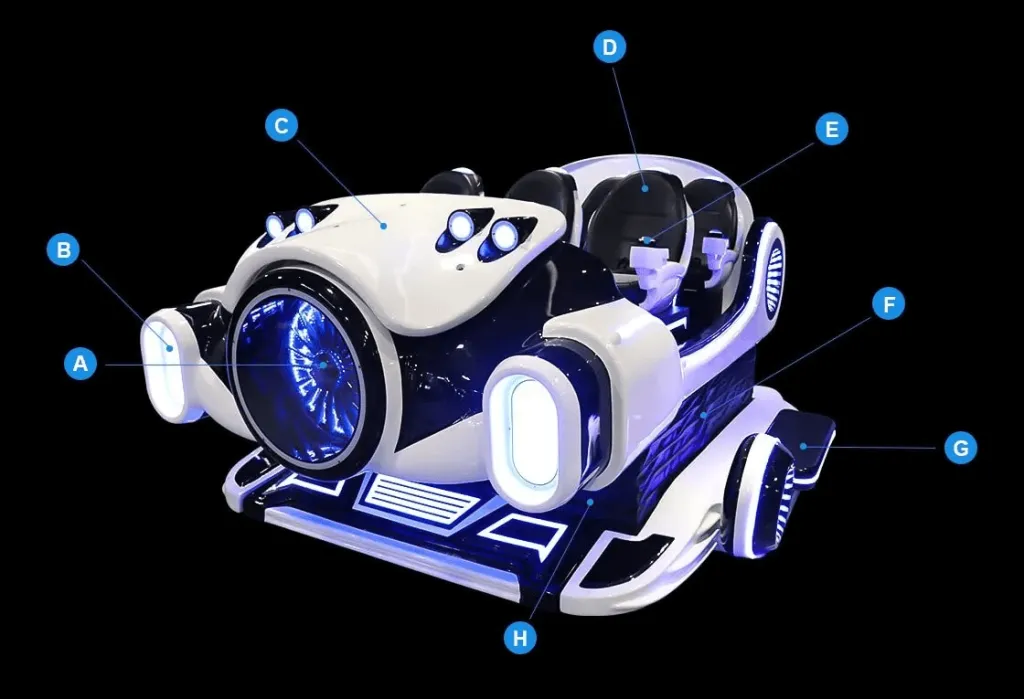
The global entertainment industry is rapidly shifting toward immersive, technology-driven attractions that deliver unforgettable experiences and strong revenue potential. Traditional arcade games and rides are no longer enough to satisfy modern audiences who crave excitement, realism, and interaction. This is where virtual reality has become a game-changer. VART Arcade stands at the forefront of this transformation, offering advanced commercial VR arcade machines designed specifically for profitable entertainment venues. From thrilling 9d vr cinema experiences to high-speed vr car racing, VART Arcade provides solutions that maximize engagement and return on investment.
The Rise of Commercial VR in Entertainment Venues
Virtual reality has evolved from a niche technology into a mainstream attraction embraced by arcades, shopping malls, theme parks, family entertainment centers, and gaming lounges. Customers are drawn to VR because it offers something traditional games cannot—full immersion. Instead of watching a screen, players become part of the action, surrounded by realistic visuals, motion, and sound.
For venue owners, VR attractions represent an opportunity to stand out in a competitive market. Commercial VR machines attract new customers, increase dwell time, and encourage repeat visits. VART Arcade understands these business needs and designs its products to deliver both entertainment value and consistent profitability.
Introducing VART Arcade Commercial VR Solutions
VART Arcade is a leading manufacturer and supplier of commercial VR arcade machines, known for innovation, quality, and reliability. The company focuses on creating VR equipment that is visually impressive, technically advanced, and built for long-term commercial use.
What makes VART Arcade unique is its comprehensive approach. Instead of offering standalone machines, the company provides complete VR solutions that include hardware, immersive content, and operational support. This ensures that entertainment venues can confidently invest in VR technology without worrying about complexity or maintenance challenges.
High-Performance VR Arcade Machines for Commercial Use
Commercial environments require equipment that can handle continuous operation and high customer traffic. VART Arcade’s VR arcade machines are built using durable materials and industrial-grade components, making them ideal for busy venues.
These machines feature advanced motion systems, high-resolution VR headsets, and responsive control technology. Whether it’s a compact simulator or a multi-seat attraction, each unit is designed to deliver smooth performance and an unforgettable experience. This level of quality ensures customer satisfaction while minimizing downtime for operators.
9D VR Cinema: A Powerful Crowd-Puller
One of the most popular attractions offered by VART Arcade is the 9d VR cinema, a multi-sensory experience that goes beyond traditional VR. Unlike standard virtual reality setups, 9D VR cinema combines immersive visuals with motion seats, surround sound, wind, vibration, and other physical effects.
This combination creates an intense and realistic experience that appeals to a wide audience, including families and first-time VR users. For venue owners, 9d vr cinema installations are highly profitable due to their ability to accommodate multiple users simultaneously and deliver short, repeatable sessions. This high throughput makes them ideal for malls, amusement centers, and theme parks.
VR Car Racing: Speed, Competition, and Excitement
Another standout attraction from VART Arcade is vr car racing, which delivers high-speed thrills and competitive gameplay. Racing simulators are universally appealing, attracting both casual players and serious gaming enthusiasts.
VART Arcade’s vr car racing machines feature realistic steering wheels, pedals, and motion platforms that simulate acceleration, braking, and cornering. Combined with immersive VR visuals, players feel as though they are driving real race cars on professional tracks. This realism enhances engagement and encourages players to return for rematches, tournaments, and improved lap times.
Maximizing Profitability with VR Attractions
One of the main reasons venue owners invest in VART Arcade VR machines is their strong revenue potential. VR attractions typically generate higher earnings per square meter than traditional arcade games. Customers are willing to pay premium prices for immersive experiences like 9d vr cinema and vr car racing.
Additionally, VR machines require less space compared to large mechanical rides, making them suitable for both small and large venues. Their modular design allows operators to scale their offerings gradually, adding more machines as demand grows.
Designed for a Wide Range of Venues
VART Arcade’s commercial VR machines are versatile and adaptable to various entertainment environments. They are commonly used in:
- VR arcades and gaming lounges
- Shopping malls and commercial centers
- Theme parks and amusement parks
- Family entertainment centers
- Tourist attractions and event spaces
This flexibility makes VART Arcade a reliable partner for businesses at different stages, whether launching a new venue or upgrading existing attractions.
User-Friendly Operation and Safety
Ease of operation is critical for commercial success. VART Arcade designs its VR machines with simple interfaces that allow staff to manage sessions efficiently. Clear instructions and intuitive controls ensure smooth operation even during peak hours.
Safety is equally important. All machines are equipped with secure seating, stable motion platforms, and reliable restraint systems. This ensures that customers can enjoy intense experiences like vr car racing and 9d vr cinema with complete confidence, while operators reduce liability risks.
Customization and Branding Opportunities
To help venues stand out, VART Arcade offers customization options for its VR machines. Operators can choose custom colors, designs, and branded content to match their venue’s theme or corporate identity.
Customized VR attractions not only enhance visual appeal but also strengthen brand recognition. A uniquely branded 9d vr cinema or vr car racing simulator becomes a signature attraction that customers associate exclusively with your venue.
Global Support and Long-Term Partnership
VART Arcade supports clients worldwide with professional consultation, installation guidance, and after-sales service. Their experienced team helps venue owners select the right machines, plan layouts, and optimize space usage for maximum profitability.
After installation, ongoing technical support and content updates ensure machines remain up to date and operational. This long-term partnership approach allows operators to focus on growing their business while delivering consistently high-quality VR experiences.
Why Choose VART Arcade for Commercial VR Machines
Choosing the right VR equipment provider can determine the success of your entertainment venue. VART Arcade stands out due to its commitment to innovation, durability, and customer satisfaction. Their commercial VR arcade machines are designed to meet the demands of modern audiences while delivering strong financial returns.
With proven attractions like 9d vr cinema and vr car racing, VART Arcade helps venues stay competitive in an industry where immersive experiences drive customer loyalty and revenue growth.
Conclusion
Virtual reality has become a cornerstone of profitable entertainment venues, offering immersive experiences that attract, engage, and retain customers. Commercial VR Arcade Machines by VART Arcade for Profitable Venues represent a smart investment for businesses seeking long-term growth and differentiation.
By combining advanced technology, exciting attractions such as 9d vr cinema and vr car racing, and reliable global support, VART Arcade empowers venue owners to deliver unforgettable experiences while maximizing profitability. As the demand for immersive entertainment continues to rise, partnering with VART Arcade ensures your venue remains innovative, competitive, and financially successful.

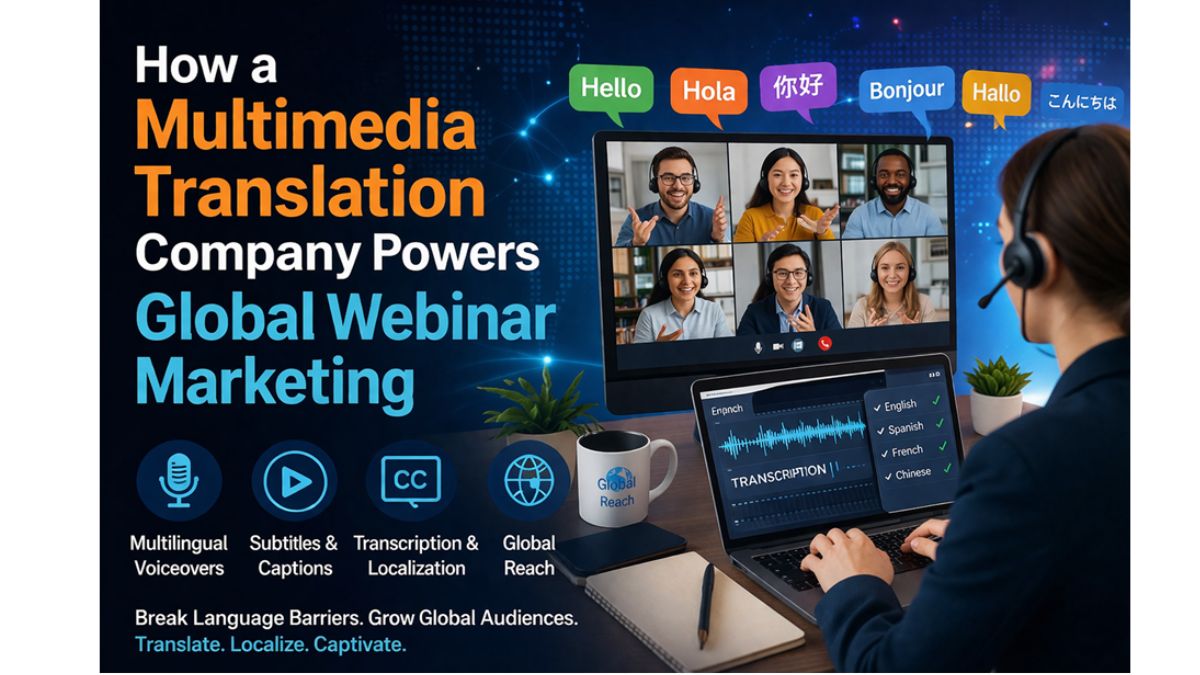
Most webinars start out simple. A product team sets up a session, sends out invites, builds a slide deck, and expects a decent turnout. On the surface, everything looks ready. Then the registrations start coming in from different regions. Someone signed up from Brazil. A group from Germany joins. A few participants appear from Southeast Asia. Suddenly, the audience isn’t local anymore. That’s where things start to get tricky. The same presentation that works perfectly for one market may feel distant in another. Technical phrases lose their meaning. Cultural references fall flat. Even humor gets lost in translation.
In the last two to three years, global webinar marketing has evolved rapidly. Remote meetings, product presentations, investor meetings, and industry presentations are no longer limited by geography. But without adapting the language, the webinar often fails to connect. That’s where a multimedia translation company comes in. Because it’s no longer just about translating words, the entire experience needs to be reshaped. This has completely changed the way international webinar strategies are developed.
Why Language Shapes Webinar Engagement
Watching a webinar requires attention, focus, and constant listening. When viewers struggle with language, it quickly becomes exhausting. Instead of concentrating on ideas, people start trying to figure out what’s being said. Subtle details disappear. Technical explanations become harder to follow. Even great speakers start to feel disconnected.
In marketing webinars, this matters more than many organizations expect. Engagement is the entire goal. A session is designed to educate, persuade, and build trust. If the audience feels lost, the message never lands. Teams working on localization often notice the same pattern during international webinars. Engagement metrics change dramatically once language barriers are removed. Viewers stay longer. Questions increase. Follow-up conversations happen more naturally. And it’s usually not because the slides have improved. It usually comes from better language access.
The Role of a Multimedia Translation Company in Webinar Localization
A webinar is not just a single format; it is multiple formats combined. There is the spoken word, text on the screen, chat happening in real-time, and video that may be used as marketing material in the future. All of these things require a unique solution. A professional multimedia translation company works across all these layers. Each component of the webinar is examined as part of the overall viewing experience.
Subtitles must appear at the right pace. Technical terminology must stay consistent across slides and narration. Cultural nuances should feel natural rather than mechanically translated. This process often starts long before the webinar goes live.
Localization teams review presentation materials early. They examine product terms, industry jargon, and phrases that may require adaptation. Slides may need redesigning since some languages take up more space. Voiceover preparation may also be planned in advance if the webinar will later be republished for global audiences. By the time the event takes place, language support becomes almost invisible to viewers. The presentation simply feels easy to follow. And that ease makes all the difference.
The Impact of Video Translation in Webinar Content
Webinars don’t really end when the live session does. The recording often becomes long-term marketing material. Companies upload sessions to learning portals, share them on websites, or repurpose clips for social media campaigns. In some industries, recorded webinars even turn into structured training resources. This is where a video translation service becomes particularly valuable.
Video content travels far beyond the original event. A webinar recorded for a North American audience may later be viewed by customers in Asia or Europe months later. Without translation, the content stays limited to one audience.
Subtitles, voiceovers, and localized captions open that content to new markets. There is another detail that experienced marketing teams notice.
Viewers are far more likely to watch longer videos when subtitles are in their native language. Even bilingual audiences often prefer reading captions while listening to the speaker. That small change can boost completion rates. And in marketing, completion often leads to conversion.
Cultural Nuance Often Matters More Than Literal Translation
Global webinars rarely fail because of grammar mistakes. They struggle when the tone feels unfamiliar. Different markets respond to different presentation styles. Some audiences expect direct explanations and structured data. Others prefer storytelling and contextual examples. Even small details can shift how a webinar is perceived.
Humor that works in one region might sound awkward somewhere else. Marketing claims may require subtle adjustments to align with local expectations. Examples used to explain a product feature might need regional references. Language experts often work closely with industry specialists during webinar localization for this reason. The goal is not simply to translate sentences but to maintain the speaker’s intent. When viewers feel that the presentation understands their context, engagement naturally improves.
Why Video Translation Service Is Becoming Central to Webinar Strategy
Webinar marketing doesn’t stay on one platform anymore. Recorded sessions often appear on product websites, video libraries, and digital marketing campaigns. Short clips are cut for social media. Highlights become promotional assets. At this stage the webinar is no longer just an event. It becomes multimedia content.
A video translation service helps adapt these assets so they remain useful across markets. Subtitles can be prepared for multiple languages at once. Voiceover versions allow the same presentation to feel native in different regions. Some organizations even create separate regional editions of their most successful webinars.
The same expert talk might appear in different languages with slightly adapted examples for each audience. Instead of producing new events every time, companies reuse valuable knowledge while expanding reach.
Conclusion
The most successful international webinars share a common trait. Participants rarely notice the translation. Slides appear natural. Subtitles move smoothly. Terminology feels consistent with industry language in each region. The audience is focusing on the ideas, not the language. It takes careful planning, cultural understanding, and technical know-how. Webinar marketing is not as complicated as it sounds. A speaker, some slides, an audience. How hard can it be? But behind the scenes, language adaptation shapes the entire experience. And when done well, the audience doesn’t just follow along; they stay engaged.
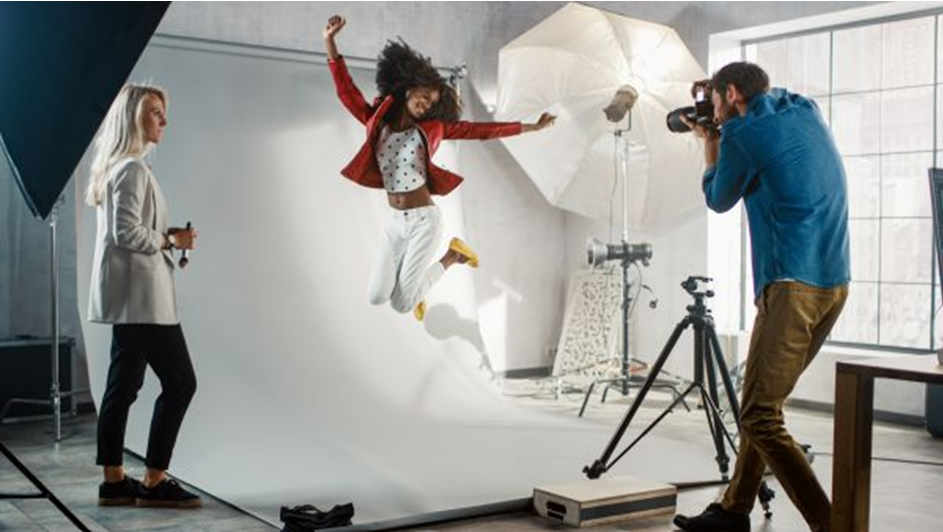
Good lighting is crucial to giving any photography or video projects a professional finish. Used well, it adds mood, depth, and dynamic energy. While, yes, some of that polish can be attributed to the quality of equipment being used, the majority of it comes down to technique. If your work is coming out flat and uninspired, the problem may not lie in your subject but in how you’re lighting it. That’s where 3-point lighting comes in.
Three-point lighting is a simple yet essential setup used by both amateurs and seasoned professionals alike. Here, we’ll break down each component of the setup, along with how they come together to improve your photo and video quality.
What Is 3-Point Lighting?
Three-point lighting is exactly what it sounds like: an arrangement of three different light sources used to illuminate a subject. Each source serves a different function, and they work together to make sure your subject is both legibly lit and well defined.
We perceive the world around us in three dimensions. A 3-point lighting setup allows us to maintain some of that perception of depth and distance, even in a medium with only two dimensions. That’s not to say that 3-point lighting is the only setup you should use, as there are artistic reasons you may want to add or subtract lights for a shot, but it provides a reliable baseline that returns consistent results.
The Lights
The trick to understanding 3-point lighting is knowing the purpose each light serves. They’re used like how a painter might use highlights and shading, drawing the viewer’s eye where you want it to go and softening some parts of the image while sharpening others. Each of the three lights adds to the setup in a specific way, although with some clever arranging and adjustments, they can be used to achieve different final effects.
1. Key Light
Your key light is your primary light source, providing the brightest light and establishing the overall exposure of the image. It is usually positioned at a 45-degree angle to the camera, slightly above a subject’s eye level, in order to create realistic shadows.
Depending on what you’re using for a key light, you can shift the mood of a shot dramatically. A more diffuse key light will more evenly light the scene, reducing shadows and creating an image that’s softer and more upbeat or calm. A sharper light, such as from a hard spotlight, will instead heighten the shadows and make the image more moody and atmospheric.
2. Fill Light
The fill light is positioned to mirror your key light to, as its name implies, fill in the shadows created by the key light and bring out more details. Broadly speaking, the fill light is less bright than the key light in order to maintain some degree of dimensionality. The dimmer you get, the more dramatic your contrast will be. This is great for creating moody, almost film-noir styled images.
A brighter fill light, by contrast, will create a more even light across your subject’s face that brings contrast down. You typically see this in interviews or promotional videos. A fill light doesn’t always have to be another light, either. Many people also make use of reflectors, LED panels, or bounce walls.
3. Backlight
The final light in the setup is the backlight. Also known as a rim light or hair light, it is placed behind the subject and aimed at their back or neck. This light creates a kind of halo around your subject, highlighting their edges and lifting them off the background. The backlight is crucial to giving your final image a degree of depth and dimensionality. Without it, you run the risk of your subject fading away into your background. Even a very faint light can be all you need to achieve your desired depth.
Setting it Up
There’s a lot to be said regarding the nuances of a 3-point lighting setup, but the basic arrangement is as follows:
- Position your key light: Place it at a 45-degree angle to the subject, just above eye level. Adjust the brightness until your subject is well illuminated but not completely washed out.
- Add the fill light: Arrange it opposite the key light at a lower intensity. Experiment with the brightness until you’ve achieved your desired mood.
- Finish with the backlight: Position it above and behind your subject, just bright enough to restore depth but not bright enough to remove any desired highlights or contrast.
Putting it All Together
The secret to getting the most out of a 3-point lighting setup is learning how to balance each source against the others. Depending on how bright your key light is, you may want to raise or lower the intensity of your fill and backlights proportionally. The distance of each light is another major factor, with closer lights increasing softness and intensity and farther ones decreasing each. The specific lights and equipment you use will also alter your temperature, color, and intensity.
If it fits within your budget, working out of a professional studio space can be a game-changer when honing your setup. Lightz Out Studios in San Diego, for example, offers not only a controlled environment to work in but also equipment rentals to broaden their clients’ arsenals. The basic concept behind 3-point lighting is simple, but the artistry lies in the nuances. Don’t be afraid to play and experiment until you’ve achieved your vision.
Three-point lighting has been a mainstay technique in the worlds of both photography and film for decades. By understanding the function of each light, as well as how to properly place and balance them, you can easily enhance the depth of your images, reduce shadows, and dramatically improve the overall quality of your material. An understanding of 3-point lighting helps define you as a professional.
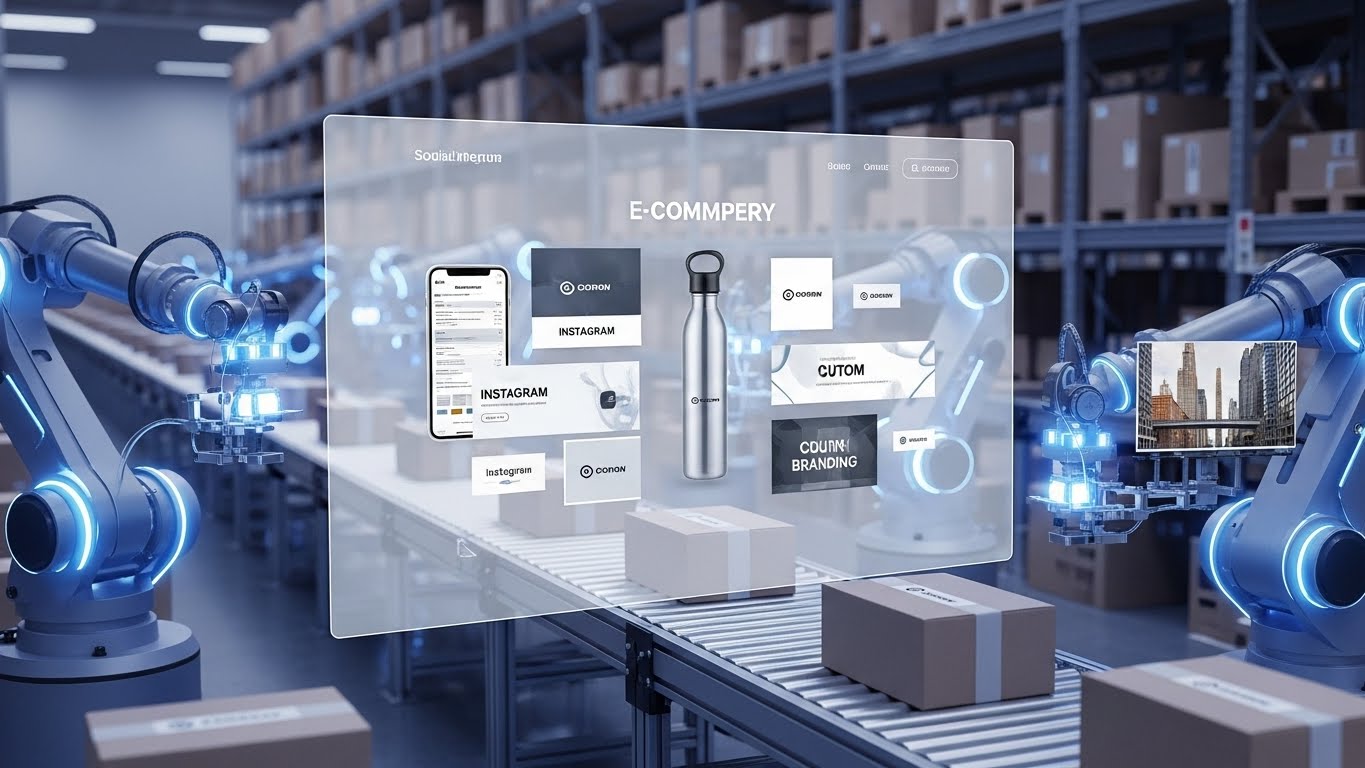
Running an ecommerce operation is frequently a race against time. With inventory management, customer support, and marketing at the top of their to-do list, design consistency can be hard to maintain. But never fear, automated branding is here!
Technology is the key here, so you can easily have a consistent visual identity on all touchpoints and look professional and with it enough to keep the store looking good as it grows (i.e., without having to design every single asset from scratch manually).
The Power of Automated Branding for E-commerce
Picture rolling out a sale on five social media platforms, as well as on your website and in an email newsletter. In the past, that would mean spending days resizing and fiddling with images. Automatic branding is a game-changer by ensuring visual contentis effectively created on the fly on all brand channels.
It’s not just speed; it’s substantial efficiency, in time and in budget. Automation tools do the grunt jobs, rather than hiring a large design team to tackle monotonous tasks. As we like to tell people, our creative automation platform is enabling e-commerce teams to supercharge their visual marketing and decrease production costs and time to market.
Key Statistics on E-commerce Automation
The impact of automation isn’t just theoretical; the numbers back it up. Here is a look at how automation is reshaping the industry:
| Metric | Impact | Source |
| Production Speed | Created 5,000 image/video ads in 2 hours (vs. 5 days manually) | Fortune Business Insights |
| Time Savings | 90% time saved on producing and distributing creatives | Bannerwise / Fortune Business Insights |
| Conversion Rate | 2x more conversions with interactive content vs. passive content | Startups.com |
| Fulfillment Costs | 25% reduction in order fulfillment costs via robotics automation | Amazon / CS-Cart |
Scaling Product Visuals Across Channels
Consistency is the trust currency of e-commerce. If your Instagram ads appear high-end, but your product pages are messy, you lose credibility. DABBA makes sure your fonts, colours, and logos stay locked down, no matter how many versions you create with creative automation.
It saves you from scaling up your workload while burning out your staff. It’s not marketing that leaves you exhausted and puts you to sleep at night, but it never goes anywhere, or a job that gives control and insight over the process through creative automation. You can now run hyper-local campaigns or personalized messages at scale, knowing that your brand identity is protected.
The Role of AI in Enhancing Visuals
The modern day Automation engine is driven by Artificial Intelligence. It can automatically crop photos to different aspect ratios, create lifestyle backgrounds behind plain product shots, and write alternative text for accessibility purposes. Cutting-edge tech like artificial intelligence turbocharges the possibilities of online retail, making it possible to do more with less and keep your storefront looking fresh without expensive photo shoots.
SoSoActive: Boosting User Engagement
Static images are nice, but they don’t tell the whole story. Looking to really catch eyes, many brands are using SoSoActive content. This means interactive content formats such as quizzes, shoppable video, and dynamic polls that require active user participation rather than passive scrolling.
When someone clicks a SoSoActive element, they aren’t browsing; they are contributing. This helps strengthen the bond between you and your brand, drive more time spent on site, and better brand recognition and conversion rates.
Semantic SEO Strategies for E-commerce
Getting ranked on Google is no longer just about finding new ways to stuff keywords into product descriptions. Semantic SEO is all about getting the meaning of a search. It’s the building content that thoroughly answers the user’s questions.
For an e-commerce site, this means your category pages won’t just enumerate all available products; they will lead and assist the buyer. If you’re selling running shoes, semantic SEO is about providing a broad topical coverage, including “best shoe for marathon training” or “how to size a running shoe”, so that search engines can recognize you as an authority within your niche.
Best Practices for Implementing Automated Branding
Ready to get started? Here are three tips to ensure success:
- Prioritize Consistency: Set strict brand guidelines (fonts, hex codes) within your automation tools so no asset goes off-brand.
- Trust the Data: Use A/B testing to see which visual styles perform best, then automate the winning format.
- Update Regularly: Don’t let your automation run on autopilot forever. Refresh your templates seasonally to keep your brand looking current.
Scale Smarter, Not Harder
Branded automation is no longer a nice convenience but more of an essential to modern e-commerce scaling. When you automate the repetitive parts of design and marketing, your team is free to concentrate on strategy and growth. You acquire the ability to be all things to everyone at all times, looking your best on every channel, without spreading yourself so thin you snap.
-

 Cast11 months ago
Rico Rodriguez
-

 Episode Guide11 months ago
Halloween episodes
-

 Cast11 months ago
Cast
-

 Guest Star11 months ago
Valentine’s Day episodes
-

 Cast11 months ago
Sarah Hyland
-

 Cast11 months ago
Who is your favourite character?
-

 Guest Star11 months ago
Guest Star: Khamani Griffin
-

 Episode Guide11 months ago
Episode Guide : Season 1